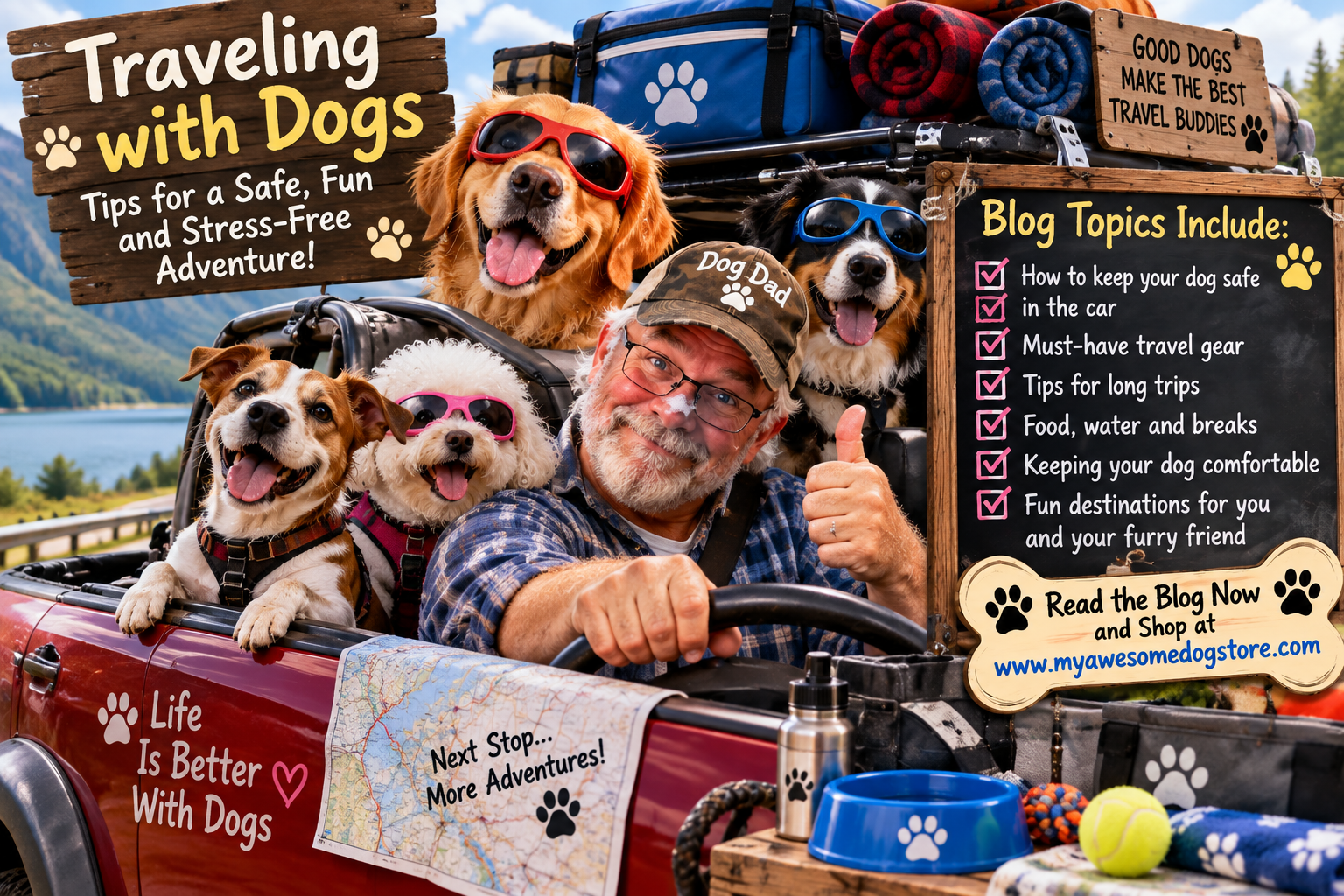
Traveling With Dogs: How to Survive the Road Trip Without Losing Your Mind
Taking a road trip with your dog sounds wonderful.
Fresh air.
New places.
Long walks.
Quality time together.
And approximately 47 stops because somebody suddenly decided they needed to sniff the same patch of grass for six minutes.
Traveling with dogs can be a lot of fun, but a little planning goes a long way toward making the trip safer and less stressful for everyone.
Especially the human holding the car keys.
Keep Your Dog Safe in the Car
Dogs should not be allowed to roam freely around the vehicle while you are driving.
A properly secured crate, carrier, or dog restraint can help keep your dog safer and reduce distractions for the driver.
It can also prevent your dog from attempting to sit in your lap at 65 miles per hour.
Your dog may believe they are helping with navigation.
They are not.
They cannot read road signs.
They can barely resist barking at cows.
Pack Water and Food
Dogs need access to fresh water during a trip.
Bring enough for the journey, especially if you are traveling through hot weather or areas where stopping may be difficult.
Pack your dog's regular food too.
Changing foods suddenly can sometimes upset a dog's stomach.
And a dog with an upset stomach in a moving vehicle is an experience nobody needs to add to their vacation scrapbook.
A travel bowl can make food and water breaks much easier.
Take Regular Breaks
Long road trips can be tiring for dogs.
Stopping every few hours gives your dog a chance to stretch, walk, use the bathroom, and get some fresh air.
Keep your dog on a leash during stops.
Even well-trained dogs can become excited or distracted in unfamiliar places.
One squirrel at a rest stop can turn a peaceful vacation into an unexpected cardio workout.
Never Leave Your Dog Alone in a Hot Car
This is extremely important.
Cars can heat up quickly, even when the weather does not seem especially hot.
Leaving a dog alone inside a warm vehicle can be dangerous.
If you need to stop somewhere that does not allow dogs, plan ahead so someone can remain with your pet or choose a pet-friendly alternative.
Your dog may be unhappy that they cannot come inside every store.
But they will recover.
Probably around the time the snacks appear.
Bring Familiar Items
Travel can be exciting, but unfamiliar places can also make some dogs nervous.
Bringing a favorite blanket, bed, or toy can give your dog something familiar.
The smell of home can help some dogs settle down in a hotel, cabin, campsite, or other new environment.
Of course, your dog may still decide the hotel bed belongs entirely to them.
You paid for the room.
Your dog paid nothing.
Yet somehow you will end up sleeping on twelve inches of mattress.
That is how dog ownership works.
Make Sure Identification Is Current
Before traveling, make sure your dog's identification tag has current contact information.
A microchip can provide another layer of identification if your dog becomes lost.
It is also smart to carry a recent photo of your dog.
Most people already have roughly 8,000 dog pictures on their phone, so this should not be difficult.
You probably have fewer pictures of your relatives.
That is okay.
We understand.
Check Pet Rules Before You Go
Hotels, campgrounds, parks, beaches, and attractions may have different rules about dogs.
Some allow pets everywhere.
Others have restrictions based on size, location, or time of year.
Checking before you arrive can save a lot of frustration.
Nothing ruins a carefully planned adventure faster than discovering that your dog is not allowed past the front gate.
Your dog will blame you.
They always do.
Pack a Dog Travel Bag
Having one bag just for your dog can make trips much easier.
Useful items may include:
Food
Water
Travel bowls
Leash and harness
Waste bags
Medications
Towels
Favorite toys
A blanket or small bed
Grooming supplies
Identification information
Basically, your dog now has more luggage than you do.
Congratulations.
You have become your dog's personal travel assistant.
Traveling With Your Best Friend Is Worth It
Yes, traveling with a dog takes a little extra work.
You may stop more often.
You may pack more stuff.
You may spend part of the trip removing dog hair from clothing that somehow never came within ten feet of the dog.
But traveling with your dog can create some wonderful memories.
New trails.
New smells.
New places to explore.
And new opportunities for your dog to stare at you from the back seat like they are wondering why you missed the turn.
If you are getting ready for your next dog-friendly adventure, visit www.myawesomedogstore.com for useful dog supplies, travel accessories, toys, beds, and other goodies for your furry travel partner.
Because every good road trip needs supplies.
And according to your dog...
most of those supplies should be treats.
Final Thought
Traveling with dogs does not have to be complicated.
Keep them secure.
Bring food and water.
Take breaks.
Plan for the weather.
Pack familiar items.
And check pet rules ahead of time.
Most importantly...
Never ask your dog, “Are we there yet?”
They have been asking you that with their eyes for the last 200 miles.